


Laser Engraver Buying Guide | Diode vs CO₂ vs Fiber
Laser Engraver Buying Guide
Choose the Right Laser for Your Creative Journey
At Hobby Tech Supply, we believe the right tool doesn’t just make things — it unlocks new skills, new materials, and new possibilities.
Laser engravers are powerful creative machines, but choosing the right one can feel overwhelming. Diode, CO₂, and Fiber lasers each serve very different purposes. This guide breaks them down clearly — no jargon, no guesswork — so you can confidently choose a laser that fits your goals, space, and materials.
Laser Types at a Glance
Before diving deeper, here’s the big picture:
-
Diode Lasers → Affordable, compact, beginner-friendly
-
CO₂ Lasers → The most versatile option for makers and small businesses
-
Fiber Lasers → Precision tools built for metal engraving
Let’s explore each one.
Diode Lasers
The Best Entry Point into Laser Engraving

Diode lasers use semiconductor laser diodes to engrave by burning material surfaces. They’re compact, approachable, and ideal for learning the fundamentals of laser engraving.
Why Choose a Diode Laser
-
Affordable entry into laser engraving
-
Small footprint — great for home or apartment setups
-
Low maintenance and simple operation
-
Long laser lifespan
Material Capabilities
-
Wood
-
Leather
-
Cardboard & paper
-
Some plastics
-
Coated or anodized metals (marking only)
Limitations to Know
-
Slower cutting speeds
-
Limited cutting depth
-
Not designed for engraving bare metals
Best For
Beginners, hobbyists, educators, and creators exploring engraving for the first time.
If you want to learn, experiment, and create without a steep investment, a diode laser is an excellent place to start.
CO₂ Lasers
The Most Versatile Laser for Makers & Small Shops
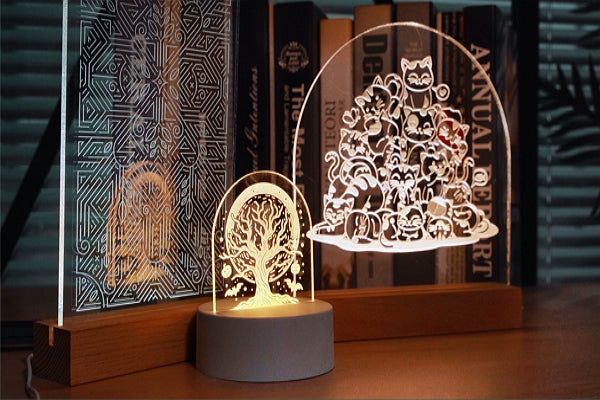
CO₂ lasers are the workhorses of the maker world. Their wavelength interacts exceptionally well with organic and non-metal materials, making them the most flexible choice for creative businesses.
Why Choose a CO₂ Laser
-
Exceptional material versatility
-
Faster cutting and deeper engraving
-
Ideal for both engraving and cutting
-
Proven, widely supported technology
Material Capabilities
-
Wood
-
Acrylic (clear & colored)
-
Leather
-
Rubber
-
Fabric
-
Glass
-
Paper & cardboard
(Metals require marking compounds or coatings)
Things to Consider
-
Requires ventilation and cooling
-
Larger machines take more space
-
Periodic maintenance (mirrors, tube lifespan)
Best For
Makers, Etsy sellers, small businesses, signage, crafts, and production workflows.
If you want one laser that can handle the widest range of creative projects, CO₂ is the most balanced choice.
Fiber Lasers
Precision Tools for Metal Engraving

Fiber lasers are purpose-built for metal marking. Instead of burning surfaces, they alter metal at a microscopic level, producing crisp, permanent engravings.
Why Choose a Fiber Laser
-
Exceptional precision and contrast
-
Fast engraving speeds
-
Minimal maintenance
-
Industrial-grade reliability
Material Capabilities
-
Stainless steel
-
Aluminum
-
Brass
-
Copper
-
Titanium
-
Precious metals
Limitations to Know
-
High upfront investment
-
Limited use on wood, acrylic, or leather
-
Not a general-purpose crafting laser
Best For
Metalworkers, jewelers, manufacturers, and professionals needing permanent metal marks.
If metal engraving is your focus, fiber lasers deliver results no other laser can match.
Diode vs. CO₂ vs. Fiber — Comparison Table
| Feature | Diode | CO₂ | Fiber |
|---|---|---|---|
| Skill Level | Beginner | Beginner → Pro | Advanced |
| Price Range | $-$$ | $$–$$$ | $$$–$$$$ |
| Best Materials | Wood, leather | Wood, acrylic, glass | Metals |
| Cutting Ability | Light | Strong (non-metal) | Metal (high power) |
| Metal Engraving | Limited | With coatings | Excellent |
| Maintenance | Low | Medium | Low |
| Workspace Size | Small | Medium–Large | Small–Medium |
How to Choose the Right Laser
Ask yourself these three questions:
1. What materials do I want to work with?
-
Wood, acrylic, leather → CO₂
-
Metal engraving → Fiber
-
Mixed light materials, learning phase → Diode
2. Where will I use it?
-
Small home workspace → Diode or desktop CO₂
-
Garage or studio → CO₂
-
Workshop or production space → Fiber
3. Is this a hobby or a business?
-
Exploring and learning → Diode
-
Selling finished goods → CO₂
-
Professional metal marking → Fiber
Laser Safety Essentials
An Essential Part of Choosing the Right Machine
Every laser engraver concentrates intense energy. Understanding safety is not an afterthought — it’s part of choosing the right laser for your environment.
Why Laser Safety Matters
Without proper precautions, laser energy can:
-
Cause serious or permanent eye injury
-
Start fires or flare-ups
-
Release toxic fumes and particulates
-
Damage optics and shorten machine lifespan
The goal isn’t fear — it’s informed confidence.
Eye Protection & Personal Safety
-
Always wear laser safety glasses rated for your machine’s wavelength
(Standard shop glasses are not sufficient) -
Never look directly at the laser beam or reflections
-
Keep enclosures, lids, and interlocks intact and functional
Ventilation & Air Quality
Laser engraving and cutting release smoke and microscopic particles.
-
Operate in a well-ventilated space
-
Use an exhaust fan or fume extraction system
-
Never engrave indoors without airflow control
Good ventilation protects both your lungs and your machine.
Fire Safety Fundamentals
-
Never leave a laser unattended while running
-
Keep a fire extinguisher within reach
-
Clear flammable clutter from the workspace
-
Use fire-safe beds or surfaces
A laser job should always have an operator present.
Materials You Must Never Cut or Engrave
A Hard Safety Line
Some materials are extremely dangerous when lasered. They can release toxic gases, corrode equipment, or create severe fire and health hazards.
Never attempt to cut or engrave:
-
PVC (Polyvinyl Chloride)
Releases highly toxic, corrosive gases that can cause serious respiratory injury and permanently damage machine optics and components. -
ABS Plastic
Produces extremely poisonous fumes and melts instead of engraving cleanly, creating hazardous smoke. -
Polycarbonate (PC)
Melts and chars, producing heavy fumes and degraded edges. Can release harmful byproducts at high temperatures. -
Coated Carbon Fiber
Releases fine carbon dust and toxic particles that pose serious respiratory risks and contaminate machines. -
Any material containing chlorine, fluorine, or bromine
These elements form corrosive or poisonous gases when heated by a laser. -
Reflective or highly heat-conductive metals (for diode & CO₂ lasers)
Metals like copper or aluminum reflect or dissipate laser energy, risking machine damage or dangerous beam reflections.
(These materials require a fiber laser instead.)
Golden Rule:
If you’re unsure what a material is made of — don’t laser it. Always verify material composition or choose a known laser-safe alternative.
Smart Habits That Protect You & Your Investment
-
Learn how to pause or stop jobs instantly
-
Know where your emergency stop is before your first project
-
Only use materials rated safe for laser processing
-
Keep pets, children, and bystanders away while operating
Quick Safety Check Before You Buy
✔ Proper ventilation available
✔ Space for safe operation
✔ Laser-rated eye protection
✔ Fire extinguisher nearby
✔ Clear understanding of safe materials
Our Take
At Hobby Tech Supply, we don’t believe in “one-size-fits-all” tools.
-
Diode lasers remove barriers to entry
-
CO₂ lasers unlock creative versatility
-
Fiber lasers deliver uncompromising precision
The right laser is the one that fits your curiosity, your materials, and your next idea.
Leave a comment